
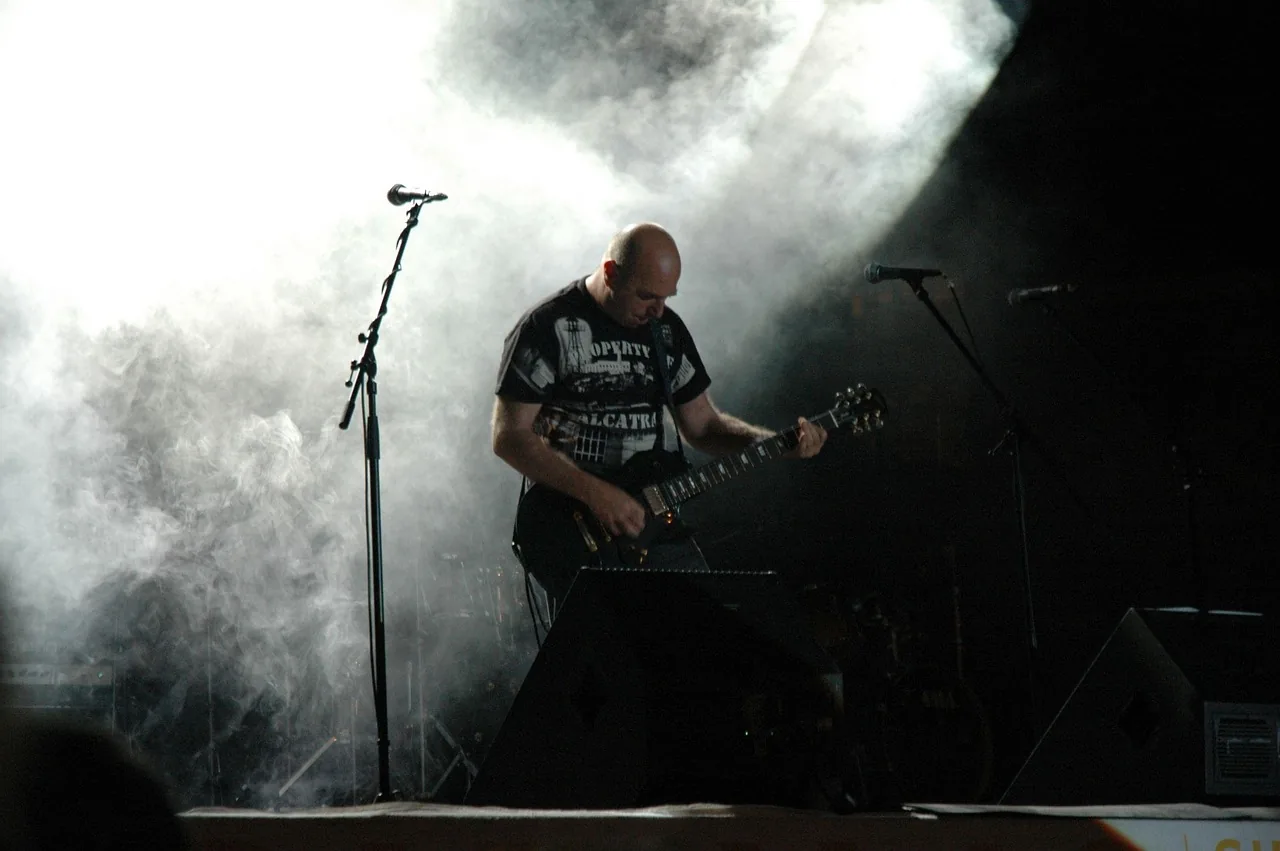
After the soundcheck and approval of the setlist, the atmosphere is electric. We are with CACHEMIRE, a band from Nantes known for its lyrics about social issues and music reminiscent of Téléphone.
This interview took place just before a concert at the Bus Palladium. Freddy, also known as Fred Bastard, describes the unexpected twist that turns a song into a touchstone for the band and its audience.
We start with the experience of playing live: reactions after concerts, where songs belong in the setlist, and how a song becomes an anticipated moment. We will look at key venues — the Bus Palladium, La Maroquinerie and Hellfest — as tests of what works.
First, follow the backstage conversation; then explore the song, the band’s origins, writing in French and what audiences seek at concerts. For cultural and historical context, see this article about the song’s inspiration.
Further reading about the work and its influences
Behind the scenes of a rock interview: when a song becomes a touchstone for a band
Just after the soundcheck, the atmosphere changes: everything starts to feel candid. The list of songs has been approved and the setlist finalized. The band’s answers come without a filter.
Before the concert: soundcheck finished, setlist approved, the conversation can begin
At the Bus Palladium, after the final check, the crew takes a breath. The singer, Freddy, speaks as he would between concerts. His words, captured in the thick of it, reveal what drives him. You can sense that live performance guides the band’s decisions.
From Nantes to Paris: live energy reveals a song that stands apart
Traveling from Nantes to play in Paris shows how far they have come. As the shows add up, a song becomes a touchstone. Audiences change, the energy on stage changes too, and feedback helps shape the running order.
“Play, play and play again” — Fred Bastard
This real experience shows how a song comes into its own when it reaches actual people. The next section examines this case as the result of a shared ambition.
Kashmir: Why This Song Is Unique in Rock
The legacy of the 1970s comes through in every chord, like a statement of the band’s intent.
An openly embraced 1970s legacy
Cachemire names Led Zeppelin as a starting point. Its vintage spirit is no mere imitation.
It shapes the band’s approach: a heavy, dynamic sound and an ever-present dramatic tension.
What sets it apart
The song builds slowly before opening into an epic sweep. The silences before and after it heighten its impact.
In practical terms, it finds a “natural place” in a setlist. It can restore the energy or shift the mood entirely.
What the audience comes for
The audience wants a high point, a moment shared together. Here, that collective response is quickly felt.
A song that is part of the band’s identity on stage becomes a touchstone for the musicians and technical crew.
“Play to bring people together”
| Criterion | Observation | Live effect |
|---|---|---|
| Silence before and after | Present | Strengthens the audience’s collective response |
| Building tension | Gradual | Shift in energy |
| Place in the setlist | Pivotal | Renewed momentum or a finale |
| Audience response | Immediate | Brings people together |
To continue the analysis and explore the historical parallel, here is some further reading.
The origins of CACHEMIRE: friends, influences and a change of direction
Instead of recruiting at random, they chose to rebuild a band with childhood friends and make their way together.
In 2012, a band was losing momentum: its drummer and guitarist left. The decision was clear: make a fresh start with friends. The first priority was personal: preserve a bond strong enough to withstand life on stage.
2012: make a fresh start, reunite friends and “make our way together”
The band began with trust. Starting again with friends made it possible to build a solid project that could withstand touring and demanding rehearsals.
Téléphone as a guide
Fred has listened to Téléphone since he was seven. That influence does not lead to imitation. It serves as a guide: champion French rock sung in French, with a raw, direct and clear sound.
Intersecting influences
Musically, Seb brings the AC/DC backbone. Farid makes sure the drumming is precise. A punk ’n’ roll sensibility supplies the attitude and straight talk.
“We chose family over a lineup of names.”
This change marks an evolution: channeling their energy without abandoning their foundations. Understanding that history helps explain what follows and the impact of a song on stage.
| Element | Origin | Effect |
|---|---|---|
| Lineup | Rebuilt among friends in 2012 | Strength on stage |
| Main influence | Téléphone (French-language songs) | Clear lyrics |
| Additional influences | AC/DC, drumming technique, punk ’n’ roll | Power, precision, attitude |
| Strategic choice | Keep the friends together | Staying power on stage |
To explore the language and references further, consult this useful glossary.
Writing in French and making every word count: current issues, social themes and humor
On stage, words do more than describe: they come to life. Choosing “I” means being clear about who is speaking and why. It is a way to avoid the lecturing tone of “you.”
The principle is simple: “I” includes the writer in the observation. The lyrics address consumption, contradictions and everyday frustrations. They read like notes taken in the moment.
The subjects are contemporary. The songs contain portraits: the president in “Moi être Roi,” Homo sapiens in “Je.” These figures make the point without preaching.
The band has complete freedom to write, but sets itself a limit. It refuses to tackle subjects that could easily go wrong without the necessary expertise. Better to set a complex issue aside than turn it into a morally simplistic piece.
“I would rather include myself than accuse others.”
Humor works here as a gentle weapon. It draws a laugh on the surface and opens the door to a critical reading underneath. On stage, these portraits become collective: the audience laughs, joins in and makes the words its own.
For further reading on inspiration and the substance of the lyrics, consult this resource: analysis of the influences.
Albums, songs and inspiration: when everyday life becomes rock
A profession can set the pace for an album when it supplies images and reveals social norms.
Photochope-moi grew out of a professional task: retouching and staging images of models.
That work supplied words and icons.
They became material for a song.
From EP to album: a telling act
Turning an act of retouching into a song shows the direct link between working life and the stage.
The song questions how appearances are manufactured.
Unexpected covers
The band chooses surprising covers.
Lio brings provocation and attitude; Bashung’s “La nuit je mens” reaches a wide audience and becomes a concert fixture.
“Surprise rather than copy.”
Growing with each album
Over time, some albums gain depth.
Others embrace a turn toward “song-driven rock,” as with “Suffit juste d’une seconde.”
The stage tests these choices: it determines what lasts.
| Element | Origin | Effect |
|---|---|---|
| Photochope-moi | Experience as a graphic designer | A narrative song built for the stage |
| Covers | Lio, Bashung | Surprise and connection |
| Evolution | Album after album | Greater depth and a new direction |
When discussing its roots and legacy, the band sometimes cites Led Zeppelin as a historical reference point.
The stage as the ultimate test: concerts, festivals and turning points
At every show, the stage delivers its verdict within a few chords. That is where the band finds out whether a song holds up, whether the crew can follow it and whether the audience responds. Reactions in the room often shape studio decisions and the choice of single.
Bus Palladium and La Maroquinerie: decisive tests
The Bus Palladium provided the setting for the interview and rehearsals. At La Maroquinerie, a “test concert” helped them choose “Pied au Plancher” as the first single.
Hellfest: constraints followed by acclaim
Twenty-five allotted minutes, initial nerves, then a turning point. The audience responded enthusiastically and confirmed the concert’s energy. It was a moment of recognition.
Olympia: intensity and a blank spot
At major shows, the performance is short. The intensity reaches its peak. Several musicians describe an adrenaline-induced “blank spot” after the final note.
Clothes and nonconformity
The choice of immaculate white and skirts defies the expected black. It is a visual statement that extends the band’s musical attitude.
Chabada: a concert recorded without a safety net
In Angers, a residency at Le Chabada produced a live album recorded without fixes. One take for the vocals and an expanded setlist: vulnerability becomes proof of authenticity.
“On stage, you can’t fake it: that’s where everything is decided.”
| Venue | Constraint | Effect | Consequence |
|---|---|---|---|
| La Maroquinerie | Test concert | Clear audience response | Choice of single |
| Hellfest | 25 minutes | Nerves followed by euphoria | Success confirmed on stage |
| Olympia | Short concerts | Maximum intensity | Strong crew cohesion |
| Le Chabada | Live recording | No fixes | An open commitment to authenticity |
To learn more about how concert audience reactions shape artistic choices, read this article about feedback from shows and the decisions it informs.
Conclusion
Ultimately, the balance between live energy and disciplined writing proves decisive. The interview shows how a song becomes a touchstone: backstage work, setlist choices and attention to audience reactions shape the band’s path.
This approach belongs to a self-assured rock tradition and reflects a commitment to writing in French. The band and its singer would rather address current issues with precision than lecture anyone.
In its recorded work, an album marks a step forward; live performance confirms it. An unretouched live album reveals what truly holds up, even when time is short.
Looking ahead, the challenge will be to preserve that nonconformity and make every concert proof that French rock still has power. For more context, here is some further reading on the roots and spirit of that legacy.