
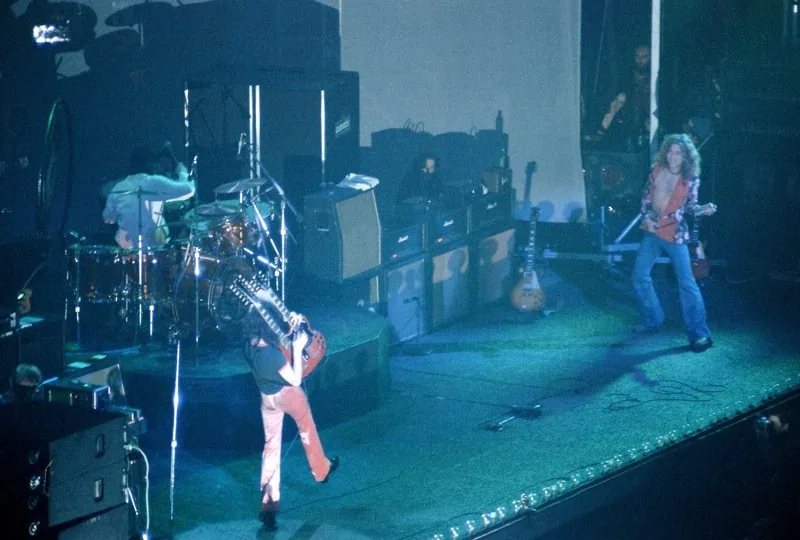
Guide objective: provide a clear route through the band’s musical career from 1968 to 1980.
We first cover the eight studio albums released between 1969 and 1979, then the posthumous album from 1982.
The article explains the chronological approach while accounting for period formats (LPs and sides A and B), making track lists and the pace of listening easier to understand.
We provide landmarks for each period: the rise (1969–1971), exploration (1973–1975), a tighter sound late in the decade (1976–1979), and posthumous archives.
What this guide offers: a useful reference for English-speaking readers, with dates, labels, key tracks and listening tips.
Readers will find ways to remember the album order and essential songs, along with a simple explanation of what defines the band’s sound.
For additional facts, see the official discography.
Understanding Led Zeppelin’s album order and major periods
To follow the band’s development, start with the release chronology, then explore the live albums, compilations and reissues.
A central chronology from 1968 to 1980
The band was active from 1968 to 1980. These years form the backbone of its creative work, with studio albums that reveal its evolution.
Why distinguish between formats
Studio albums reflect production choices and artistic direction. Live albums and concert films document the band’s stage energy and extended performances.
Compilations offer an introduction, while box sets aim to be comprehensive. Singles give new listeners quick starting points.
Record labels and period formats
Atlantic supported the band’s initial rise; Swan Song took over later, influencing its visual identity and release strategy.
The LP presents music across sides A and B (A, B, C and D for double albums). Cassette and CD later changed listening habits and expanded the possibilities for reissues.
This guide considers each record’s context, key tracks, running order and impact on the band’s career.
The band and its impact on the sound
Each musician’s personality shapes the balance of riffs, vocals, keyboards and groove.
Jimmy Page: riffs, production and structure
Jimmy Page builds the arrangements. His guitar provides the riffs and shapes the hard rock and blues identity of many songs.
In the studio, his command of arranging helps give each record a recognizable sound.
Robert Plant: a voice in motion
Robert Plant brings vocal power and songwriting. On tour, his choices of key often influence set lists and production.
John Paul Jones: bass, keyboards and color
John Paul Jones adds texture through bass, keyboards and arrangements. He broadens the band’s palette toward folk and funk.
John Bonham: groove and force
John Bonham forms the rhythmic backbone. His playing creates a signature that distinguishes the band’s recordings.
“The groove starts with a single beat: when the drums hold steady, everything else can take flight.”
Listening tip: from album to album, notice what leads the music—the riff, keyboards or drums—to better appreciate the richness of Led Zeppelin’s sound.
To explore the drummer’s role further, focus on the drummer and his place in the band’s dynamics.
Led Zeppelin I: the foundational album (released January 12, 1969)
Released in January 1969, this debut album marked the birth of an immediately recognizable sound. Released on January 12, 1969, on Atlantic, it was designed for the LP format and is available today on LP, cassette and CD, depending on the edition.
The record establishes a blend of blues, heavy rock and live urgency. It foreshadows the long concerts and improvisations that would become a hallmark.
Key tracks and their role in the band’s career
“Good Times Bad Times” opens the record with a tight groove: an introduction to its rhythm and sound. “Dazed and Confused” is the long piece that anticipates live improvisations. “Communication Breakdown” displays the directness and raw force at the root of the band’s hard rock.
“The tension between rhythmic precision and improvised release creates an immediate sonic identity.”
Listening to sides A and B
On an LP, the division between sides A and B guides the listening experience. The first brings together direct, forceful tracks. Side B makes room for longer pieces and extended atmospheres.
This structure helps listeners remember the track order and understand the album as a vinyl listening experience.
| Element | Detail | Impact |
|---|---|---|
| Release | January 12, 1969 | Chronological starting point |
| Label | Atlantic | International distribution |
| Formats | LP / cassette / CD | Different ways to listen across eras |
| Key tracks | Good Times Bad Times, Dazed and Confused, Communication Breakdown | Define the sound and stage presence |
| Vinyl structure | Side A / Side B | Guides the listening order |
The interplay of guitar, vocals, bass and drums is already clear. To continue exploring, see the page on Led Zeppelin IV, which illustrates the discography’s later development.
Led Zeppelin II: the hard rock explosion (released October 22, 1969)
The second record accelerates the band’s rise: released on October 22, 1969, it establishes a heavier, more direct sound. This studio album strengthens the band’s international popularity.

Whole Lotta Love and the record’s identity
“Whole Lotta Love” captures the record’s identity: a central riff, tight production and momentum suited to touring. The song became a cultural touchstone and a symbol of a more aggressive direction.
Ramble On, Heartbreaker, Living Loving Maid: listening landmarks
“Ramble On” shows the band’s melodic side alongside the power of “Heartbreaker.”
“Living Loving Maid (She’s Just a Woman)” adds a restless contrast. Together, these songs shape the listening experience.
| Element | Detail | Impact |
|---|---|---|
| Release | October 22, 1969 | Rapid growth in recognition |
| Label | Atlantic | Wide international distribution |
| Formats | LP / cassette / CD | Listening across several formats |
| Key tracks | Whole Lotta Love, Heartbreaker, Ramble On, Living Loving Maid | Consolidates the hard rock sound |
What this record changes
Led Zeppelin II establishes a formula: a heavy sound, live energy and a cohesive album. Listening tip: play it in full to hear its internal logic rather than playing the tracks separately.
Led Zeppelin III: the folk and acoustic turn (released October 5, 1970)
Released on October 5, 1970, on Atlantic, the third album marks a step toward maturity. The band complements its electric sound with acoustic pieces and more nuanced arrangements.
Immigrant Song: the electric bridge
Immigrant Song bridges the hard rock period and this new direction. Short and forceful, it retains the tension while opening the door to other textures.
Since I’ve Been Loving You and the blues foundation
Since I’ve Been Loving You places the blues back at the center. The piece has great intensity and shows that the band can also excel at slow, restrained emotion.
Tangerine, Bron-Y-Aur Stomp: balancing styles
“Tangerine” offers a beautiful acoustic melody. “Bron-Y-Aur Stomp” brings rural energy and folk guitar playing to the album.
Listening strategy: alternate between electric and acoustic tracks to hear how the record is built. Then listen again, one side at a time, to follow its vinyl structure.
| Element | Detail | Why it matters |
|---|---|---|
| Release | October 5, 1970 | Stylistic shift after two heavier records |
| Label | Atlantic | Continued international distribution |
| Formats | LP / cassette / CD | Designed for listening by vinyl side |
| Key tracks | Immigrant Song, Since I’ve Been Loving You, Tangerine, Bron-Y-Aur Stomp | Balance between power and subtlety |
Led Zeppelin IV: the untitled album that became a classic (released November 8, 1971)
Released on November 8, 1971, on Atlantic, this album had no official title on its cover and quickly became a classic. It connects the first three records and provides a foundation for what followed.
Black Dog and Rock and Roll function as de facto singles. Their immediate appeal shaped the wider public’s view of the band: bold riffs, a driving groove and memorable choruses.
Stairway to Heaven holds a central place. Its gradual build and musical narrative offer a listening journey that structures the album. The track brings together the band’s virtuosity and its ability to blend folk and rock.
When the Levee Breaks returns to the band’s original blues roots while delivering a massive production. This reinterpretation shows how the group transforms an old theme into a powerful modern piece.
Listening tip: notice the contrasts between hard rock, folk and blues to hear how this album brings together the strengths of I, II and III. That balance opens the way for the experiments of 1973.
| Element | Detail | Formats |
|---|---|---|
| Release | November 8, 1971 | LP / cassette / CD |
| Label | Atlantic | International distribution |
| Key tracks | Black Dog, Rock and Roll, Stairway to Heaven, When the Levee Breaks | De facto singles / long pieces |
Houses of the Holy: exploration and new grooves (released March 28, 1973)
Released on March 28, 1973, this album marks a stage at which Led Zeppelin favors exploration over simply building more power. The band experiments with textures, grooves and subtler moods.
The Song Remains the Same opens the record with driving momentum. In contrast, The Song Remains the Same and The Rain Song form a melodic pair: one carries the energy, while the other gives the listener room to breathe.
The Song Remains the Same, The Rain Song: the melodic core
The interplay of momentum and gentleness changes the listening dynamic. Both tracks show the band expanding its harmonic palette and making space for quieter moments.
No Quarter: atmosphere, keyboards and live power
No Quarter unfolds through dark keyboards and a tension that grows onstage. Its synthetic textures and extended passages suggest the theatrical dimension of the live show.
D’yer Mak’er and The Ocean illustrate the band’s rhythmic experimentation. They drew mixed reactions at the time but reinforce the sense that the group refused to repeat itself.
| Element | Detail | Impact |
|---|---|---|
| Release | March 28, 1973 | Stylistic shift |
| Label | Atlantic | Formats: LP / cassette / CD |
| Key tracks | The Song Remains the Same, The Rain Song, No Quarter | Grooves and textures |
Listening tip: place this album between IV and Physical Graffiti to hear the transition toward the grander scale of the next record. In 1973, touring, particularly in May, confirmed the growing live power of these songs.
Physical Graffiti: the pivotal double album (released February 24, 1975)
Physical Graffiti marks the point at which the band’s studio ambitions outgrow the traditional format, offering a wide-ranging portrait of its music.
Released on February 24, 1975, on the Swan Song label, this double album (2 LPs, 2 CDs, cassette) combines new pieces with reworked tracks. It is often considered the peak of an expansive phase.

Kashmir: its defining sound and construction
Kashmir is built on a repeating motif and massive orchestration. The song reaches beyond the album to become an essential symbol of the discography.
Trampled Under Foot, In My Time of Dying: energy and extended playing time
Trampled Under Foot delivers a direct funk groove. In My Time of Dying relies on length and tension, approaching the spirit of a live performance.
How to listen to a double album: pacing, sides and overall coherence
For the full experience, play sides 1 through 4, keeping their natural pauses. You can also listen thematically: epic pieces on one hand, direct tracks on the other.
The Swan Song label and a new phase
The move to the Swan Song label confirms a stronger identity. The production remains ambitious while maintaining artistic continuity with Led Zeppelin’s earlier albums.
- Two suggested approaches: listen to all the sides in order.
- Or listen by theme: epic pieces and compact songs.
Presence: a return to essentials (released March 31, 1976)
After the double album’s exuberance, the band chooses a leaner approach that contrasts with the scale of its previous production.
Presence was released on March 31, 1976, on the Swan Song label. It first appeared on LP and cassette, then on CD in later reissues. The result sounds tenser, tighter and almost clinical.
Achilles Last Stand opens the record as a long epic. It highlights the instrumental performance, layered guitars and rhythmic strength, in the studio and onstage.
Achilles Last Stand: an epic test of endurance
The studio version unfolds through layers of sound and repeated motifs. Its scale of production, precise guitar attacks and continuous rhythmic drive are all audible.
Nobody’s Fault But Mine, Tea for One: blues and intensity
Nobody’s Fault But Mine electrifies a blues standard anew. The tension is tangible; bass and drums push the song toward heavy, modern rock.
Tea for One provides a darker, almost solemn emotional counterweight.
Listening tip: use headphones to distinguish the guitar layers, bass and drums. This reveals the ensemble playing beneath the forceful attack.
| Element | Detail | Impact |
|---|---|---|
| Release | March 31, 1976 | Return to a tighter sound |
| Label | Swan Song | Continuity with the preceding phase |
| Formats | LP / cassette / CD | Different listening formats depending on the edition |
| Key tracks | Achilles Last Stand, Nobody’s Fault But Mine, Tea for One | Epic scope, electrified blues and intensity |
This record prepares the transition toward clearer textures, with Jimmy Page developing certain production experiments on later recordings.
In Through the Out Door: the original era’s final studio album (released August 15, 1979)
This August 1979 release closes a musical saga and offers a richer range of textures than its predecessors. Released on August 15, 1979, on Swan Song, the album is available on LP, cassette and CD.
In Through the Out Door is often regarded as the final album of the original era. It places keyboards and arrangements clearly in the foreground rather than raw riffs.

All My Love, Fool in the Rain: standout tracks
All My Love and Fool in the Rain show the record’s accessible direction. “Fool in the Rain” blends groove with a pop touch, helping it reach radio audiences late in the decade.
Carouselambra, In the Evening: late-period production
“Carouselambra” and “In the Evening” show particular care in their textures. Their arrangements reflect late-1970s sounds and dense production.
Context and place in the chronology
As the final record before the band dissolved in 1980, this album ends the cycle of studio releases by all four members. For an overview of rankings and opinions, see a critical list such as this collection of reviews.
| Element | Detail | Note |
|---|---|---|
| Release | August 15, 1979 | End of the original creative cycle |
| Label | Swan Song | Formats: LP / cassette / CD |
| Key tracks | In the Evening, Fool in the Rain, Carouselambra, All My Love | Blend of accessibility and ambition |
| Direction | Keyboards and textures | Different from the riff-centered albums |
Coda: the posthumous album and archives (released November 19, 1982)
Coda brings together recordings from scattered sessions rather than material conceived as a single album. Released on November 19, 1982, by the Swan Song label, it appeared on LP, cassette and CD.
Coda collects unreleased material, studio outtakes and tracks revisited without having been completed. Hear it as an editorial collection that closes a chapter after the band’s breakup.
Why it is not a final studio album in the usual sense
No session was planned to create a cohesive new album. The tracks come from different periods and were assembled for release rather than conceived as one artistic project.
Wearing and Tearing, Bonzo’s Montreux: the logic of unreleased tracks
Wearing and Tearing has a raw energy that makes this studio outtake compelling for fans.
Bonzo’s Montreux (also presented as Moby Dick/Bonzo’s Montreux on some editions) is a document centered on John Bonham. It works as a studio snapshot.
| Element | Detail | Note |
|---|---|---|
| Release | November 19, 1982 | Posthumous editorial conclusion |
| Label | Swan Song | Formats: LP / cassette / CD |
| Key tracks | Wearing and Tearing, Bonzo’s Montreux | Unreleased tracks and session documents |
Suggested listening approach: treat Coda as a supplement to the 1969–1979 chronology. After discovering the main albums, continue with this collection, then move to the live releases to hear the band’s stage energy.
“Coda closes an era: an assembly of archives rather than a composed final act.”
Led Zeppelin: complete discography and album order for live and video releases
Live recordings and concert films offer another essential perspective on the band’s career, often more direct than the studio albums.
Why live recordings matter: in concert, songs stretch into long versions, welcome improvisation and take on different arrangements. These elements reveal a raw energy that studio recordings sometimes lack.

The Song Remains the Same (September 28, 1976)
Released in 1976 on Swan Song, The Song Remains the Same is both a soundtrack and a film. It is a starting point for understanding the band’s live power in the 1970s.
Formats: 2 CDs / cassette / 2 LPs. Together, they capture the tension between performance and its visual presentation.
BBC Sessions and The Complete BBC Sessions
BBC Sessions (November 11, 1997) documents short, often raw radio recordings. They reveal how the arrangements evolved in the band’s early years.
The Complete BBC Sessions (September 16, 2016) expands this collection and lets listeners compare studio and radio versions.
How the West Was Won (May 27, 2003)
A live landmark, How the West Was Won has a generous track list and sound quality that make it feel like a collection of live highlights. Formats: 3 CDs / 2 DVDs / 4 LPs.
Celebration Day (O2 concert, December 10, 2007)
Celebration Day documents the reunion with Jason Bonham at the O2 Arena. Released after the studio chronology, it rounds out the live journey and closes the band’s stage story.
- Listening tip: begin with The Song Remains the Same, continue with How the West Was Won, then add the BBC Sessions to hear historical versions.
- For biographical context, see the official profile of Led Zeppelin.
Compilations, box sets and singles: finding your way
With so many box sets and compilations available, deciding what to buy can be difficult. These simple criteria will help you sort the options by your goal.
Anthologies and remasters
Boxed Set Vol. 1, Boxed Set II and Remasters
Collections such as Boxed Set Vol. 1 (released September 7, 1990) and Boxed Set II gather takes, B-sides and rarities. The Remasters focus more on sound quality. Choose an anthology to explore a broader history; choose the remasters for faithful listening.
Introductory compilations
Early Days, Latter Days, Mothership
The compilations Early Days, Latter Days and Mothership provide starting points. They help you identify the different periods before listening to each record in full.
Complete box sets
The Complete Studio Recordings and Definitive Collection
Box sets such as The Complete Studio Recordings and the Definitive Collection offer all the albums in an organized collection. They suit listeners who want a complete archive and an uninterrupted chronology.
Notable singles
Quick landmarks
Several singles stand out: Whole Lotta Love, Immigrant Song, Black Dog and Fool in the Rain. Remember that the band’s discography is largely album-centered, even when a song becomes a de facto single.
| Type | Example | Best for |
|---|---|---|
| Anthology | Boxed Set Vol. 1 / Boxed Set II | Collectors and listeners curious about unreleased material |
| Compilation | Early Days / Mothership | New listeners and playlist fans |
| Complete box set | The Complete Studio Recordings | Archiving and chronological listening |
“Check track lists before buying: avoid duplicates and choose a live album if you want to hear the band’s stage energy.”
Conclusion
, to finish, adopt a listening approach that puts the album at the center of the musical experience. Play the studio albums in this recommended order: Led Zeppelin I (1969) → II (1969) → III (1970) → IV (1971) → Houses of the Holy (1973) → Physical Graffiti (1975) → Presence (1976) → In Through the Out Door (1979). Coda (1982) remains a posthumous collection.
To understand the band, listen to whole albums: their sides, coherence and musical progression matter as much as their signature songs.
Three routes are possible: strict chronology, essential albums (II, IV, Physical Graffiti and a live album), or a deeper exploration (BBC Sessions / The Complete BBC Sessions). Add a major live album to each route to appreciate the band’s stage presence.
One final landmark: the O2 Arena concert on December 10, 2007, remains a notable live epilogue. Keep this article as a quick reference for release order, the Atlantic and Swan Song labels, and the listening approach for each major period.