
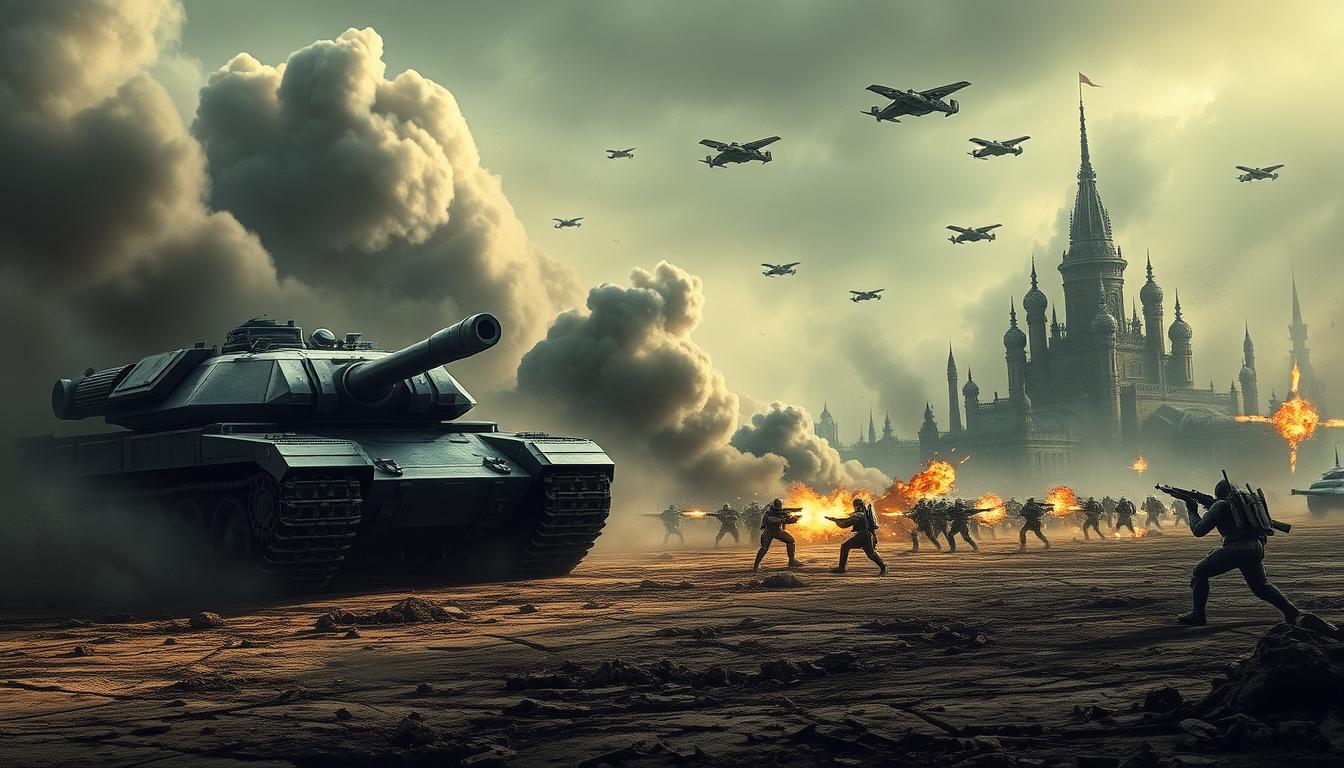
Released on July 28, 2006, on the Black Lodge Records label, Attero Dominatus marked a decisive turning point in Sabaton’s discography. Produced by Tommy Tägtgren, the record became a pillar of heavy metal and offers an authentic musical experience.
The title Attero Dominatus resonates deeply in the band’s history, symbolizing both power and historical storytelling. Sabaton excels at connecting music with historical events, a defining feature of its style.
Released in 2006, this album showcases Sabaton’s ability to combine heavy metal with stories from the past. To learn more about the band’s history, you can visit its official site.
Introduction and general context
Since its formation in 1999, Sabaton has established itself as one of heavy metal’s most distinctive bands. With Attero Dominatus, released in 2006, the band strengthened its reputation by weaving historical accounts into its songs.
Introducing the album and the band
Attero Dominatus is more than an album: it is a journey into history driven by powerful melodies. Formed in Sweden, Sabaton chose to focus on historical themes, offering a distinctive perspective within the genre.
Historical and musical context
The album stands out for its references to major battles and historical events. This connection between heavy metal and historical storytelling is a Sabaton hallmark that attracts fans around the world. The album’s name, inspired by Latin phrases, suggests a power and depth that resonate with music and history enthusiasts.
To learn more about the band’s history and musical approach, you can consult detailed academic resources.
Origins and behind the scenes
The album Attero Dominatus emerged from an intense creative process marked by challenges and unusual incidents. In just three weeks, Sabaton captured the essence of its music, combining heavy metal with historical stories.
The creative work and recording challenges
- The band faced intense pressure to finish the album on a tight deadline.
- A notable incident involving Pär nearly disrupted the recording, but Joakim Brodén’s intervention saved the situation.
- The heavy metal spirit prevailed despite the obstacles, strengthening Sabaton’s sonic identity.
The inspiration behind each track
Each song on Attero Dominatus draws on historical events, reflecting the album’s name and the band’s identity. Daniel Mÿhr’s contribution was crucial to the arrangements, adding an unprecedented technical dimension.
To discover more about the making of this landmark album, you can consult this resource.
Attero Dominatus: Sabaton’s origins and resonance
The title Attero Dominatus symbolizes a key turning point in Sabaton’s discography. Released in 2006, the album marks the transition from Primo Victoria to the band’s later musical development. The album’s name, inspired by Latin phrases, reflects deeply rooted themes of war and history.
A comparison with Primo Victoria reveals stylistic continuity alongside greater maturity. Sabaton strengthened its identity by incorporating historical stories into its songs, offering a distinctive perspective on heavy metal.
| Characteristics | Attero Dominatus | Primo Victoria |
|---|---|---|
| Themes | War, history | War, history |
| Musical style | Heavy metal | Heavy metal |
| Impact | Strengthened the band’s reputation | Established its foundation |
The record remains a major reference point, illustrating Sabaton’s commitment to powerful musical storytelling. To learn more about the album and its legacy, you can visit this site.
Analysis of the tracks and historical references
Each song on Attero Dominatus draws on significant historical events and offers a distinctive perspective on key moments from the past.
Major battles and events that inspired the album
- The Battle of Berlin, which marked the end of the Second World War in Europe.
- The use of atomic weapons in Japan, portrayed with strong emotion.
- Hitler’s rise, addressed from a detailed historical perspective.
These historical references enrich the album and turn each track into a journey through time.
The lyrics’ narrative approach
Sabaton’s lyrics convey historical events through compelling storytelling. The album, released on July 28, 2006, uses detailed accounts to immerse listeners in history.
Each song balances emotion and precision, making history accessible and engaging.
Musical performance, production and critical reception
Released in 2006, Attero Dominatus marked a turning point in Sabaton’s discography. Produced by Tommy Tägtgren, the record became a pillar of heavy metal and offers an authentic musical experience.
Musical quality and arrangements
Critics noted the album’s craftsmanship and the strength of its arrangements. One site gave it a score of 3.5/5, and its production at Abyss Studios received praise.
- The guitar solos and choral vocals stand out, adding an epic dimension to the tracks.
- The prominent keyboards recall Nightwish to some extent, reinforcing the album’s musical identity.
Reception from critics and listeners
While some critics praised the technical quality and polished production, others noted a degree of similarity between tracks, though this did not detract from the overall experience.
The album’s name, inspired by Latin phrases, suggests a power and depth that resonate with music and history enthusiasts.
Conclusion
In conclusion, Attero Dominatus remains an essential milestone in heavy metal history. Released in 2006, this Sabaton album combines musical power with historical storytelling. Each track immerses us in significant events from the past and offers a distinctive perspective on history, carried by powerful melodies.
Produced by Tommy Tägtgren, the album strengthened Sabaton’s reputation and pushed the genre’s boundaries. Its impact on the band’s career and on heavy metal more broadly is undeniable. The album’s name, inspired by Latin phrases, symbolizes a depth and power that still resonate with fans and newcomers today.
If you would like to explore power metal further and discover other landmark albums, you will find comprehensive resources on the subject. Attero Dominatus remains an essential reference point, showing that music can be both a journey through time and an intense emotional experience.