

Goal: learn to play this iconic guitar riff through a practical approach. This short tutorial covers rhythmic timing, useful finger positions, and the endurance you need.
What you’ll learn: the song’s background, tuning, main riff, chords, key, and techniques to practise so you can play cleanly and in time.
The riff centres on an F# that seems simple but demands precision and consistency. It immediately evokes Led Zeppelin and the song’s rock energy.
Watch out for common pitfalls: confusing single-note picking with sixteenth-note strumming, tiring your picking hand, playing uneven attacks, or misplacing the accents. For the sound you want, aim for a firm attack, powerful dynamics, and a defined rock tone on the octaves.
Immigrant Song (Led Zeppelin): background, rock energy, and the song’s defining features
This riff is a tense pattern that seems simple but calls for sustained force in every bar.
Led Zeppelin III, released in 1970, includes this song, which took shape during sessions at Headley Grange. The isolated house and mobile recording unit helped capture a raw, lively performance.
Credits and songwriting
Jimmy Page and Robert Plant co-wrote the song. Their combination of riff and imagery left its mark on rock ’n’ roll by bringing melody and atmosphere together.
Norse imagery and vocal power
The lyrics evoke Norse mythology — “land of the ice and snow” — and add to the musical tension.
Robert Plant’s high-pitched voice works like a battle cry, becoming a rhythmic counterpart to the guitar.
Why this pattern is demanding
At high speed, playing octaves takes endurance, picking-hand precision, and strict timekeeping. It looks simple on paper but is hard to sustain throughout the song and onstage.
- The Headley Grange atmosphere: energy and immediacy.
- A minimalist riff that demands consistency.
- Next, prepare your instrument by checking the tuning and tempo.
Prepare your guitar for Immigrant Song: tuning, tempo, and timing
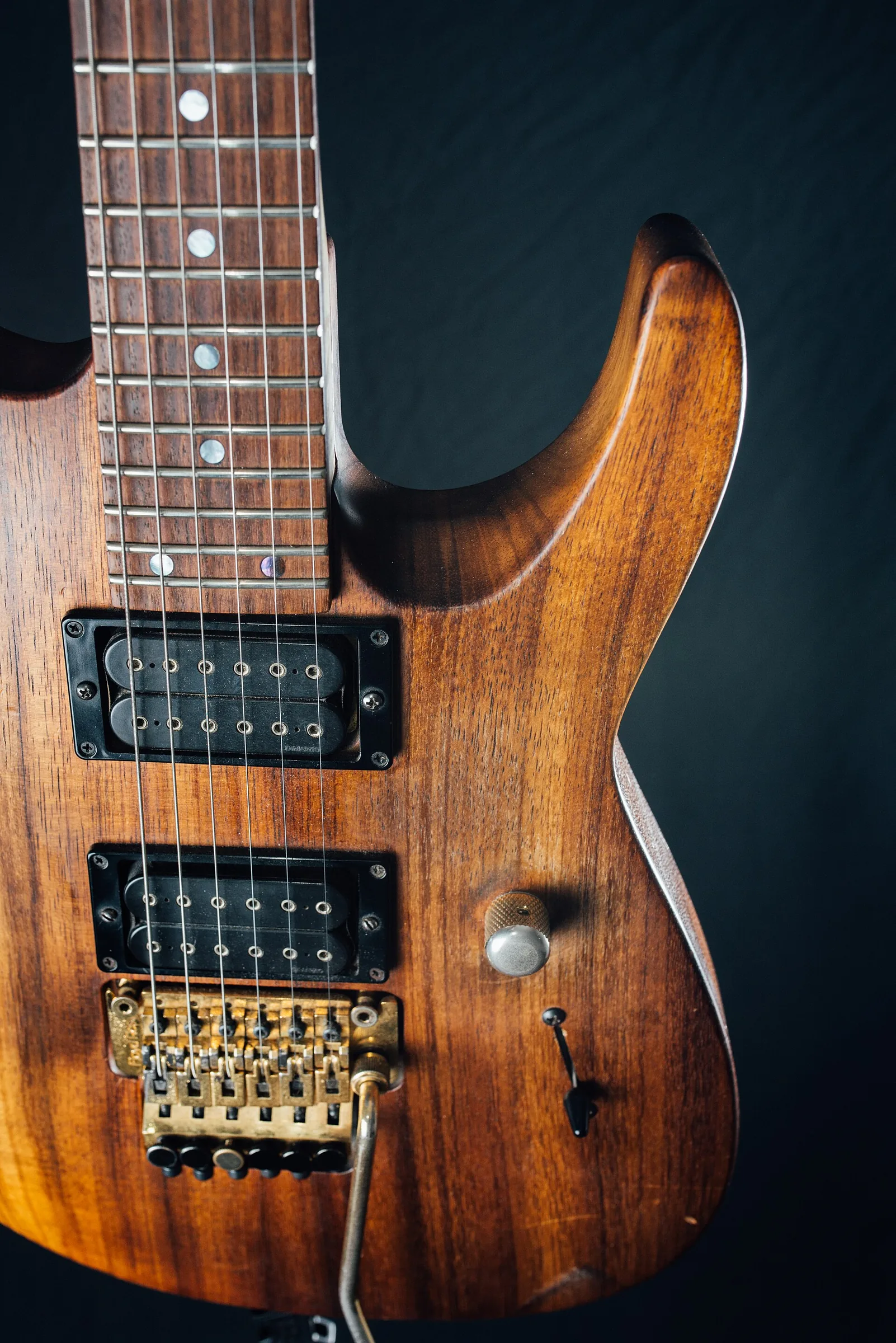
Before playing a single note, make sure your guitar is in standard EADGBE tuning, as used on the recording. An electronic tuner is enough; check the intonation too if your bridge is adjustable.
Remember the string order: E-A-D-G-B-E. If you are a beginner, saying the letters aloud can help you remember the strings and their positions on the fretboard.
Rhythm and subdivision
The song is in 4/4, with a sixteenth-note feel. Count “1 e & a 2 e & a 3 e & a 4 e & a” before speeding up.
Keep your pick moving steadily down and up as you count. Maintain that motion even when you do not play every note.
Picking mechanics and sound
Make your picking hand a “machine”: continuous motion steadies the groove and improves note accuracy. Practise slowly, then raise the tempo.
“Start with a clear rock tone or moderate overdrive so you can hear every attack.”
- Routine: use a tuner → check intonation → repeat the string order.
- Goal: feel the rhythm before speeding up.
- Next: once the rhythm is steady, tackle the main riff’s tablature.
Immigrant Song: tablature and tips for Jimmy Page’s sound
The pattern centres on a single pitch, F#, played in octaves for maximum impact. This creates a powerful wall of sound without complex harmony.
Fretting-hand position and muting
Hold the octave firmly: place your index finger on the lower note and your ring finger or pinkie on the octave. Muting adjacent strings is essential to prevent unwanted noise.
Picking-hand attack and picking position
Use a firm pick and a steady down-and-up motion. Picking near the bridge gives the note more bite; picking around the middle produces a rounder tone.
Breaking down the rhythm and building speed
Isolate one bar and count “1 e & a” as sixteenth notes. Practise with a metronome at 60 → 80 → 100 BPM while keeping the notes clean.
Accents, tone, and live variations
Strike certain beats harder to recreate the song’s rock energy. Set the gain and volume for sustain without blurring the attacks.
“Keeping the riff steady means managing fatigue and the rush of adrenaline onstage.”
- Technique: the octave creates an immediate impact.
- Practice: repeat it slowly, then speed up.
- Tone: moderate gain with clear note definition.
Chords, harmony, and key: understand what you play and remember it better
The song’s harmony reveals why some chords feel restful while others create tension.

Essential chords and practical options
The chords around the riff are straightforward: E, A, B, C. Depending on your level, play them as open chords, barre chords, or power chords.
Power chords thicken the sound without masking the voice. They suit rock arrangements and leave room for the vocals.
Key and borrowed chords
The tonal centre is F# minor. E and A are diatonic. B major and C major are borrowed chords that increase the intensity.
These moves outside the diatonic scale create dramatic contrast before the resolution.
The final C9 and improvisation
The final C9 adds a dissonant colour that heightens the tension before the resolution.
To improvise, use the F# minor pentatonic scale (F#-A-B-C#-E). These notes provide a foundation for short rock and blues phrases.
- Connect each chord with its function to help you remember it.
- Experiment with power chords to adapt your arrangements.
- You can use these tools in other genres and songs.
“Jimmy Page” techniques to master for an authentic performance
Mastering small technical details can turn a good riff into a memorable performance.
Power chords: aim for a thick sound without muddiness. Press the strings firmly and pick them cleanly. Exercise: change positions for 30 seconds with a metronome.
Palm muting
Rest your palm near the bridge to tighten the groove without choking the notes. Vary the pressure to let a note ring when you want it to.
Hammer-ons and pull-offs
Practise the motion: pick the string, then connect the notes without picking it again. Aim for an even volume. Do sets of eight repetitions.
Slides
Slide between positions while keeping time. Sliding too slowly or too quickly disrupts the rhythm. Suggested exercise: alternate a slow slide with a fast one while staying within the bar.
Bends and vibrato
Aim for the target note, control the release, and conserve your energy. Vibrato should sustain the note without pulling it out of tune. Think of these gestures as inflections of the voice for more expression.
“Practise one technique for five minutes a day to make steady progress.”
- Routine: a short focused lesson → slow repetition → speeding up with a metronome.
- Benefit: better rhythmic precision, dynamics, and style.
Conclusion
This tutorial covers the essentials for tackling the song: its appearance on Led Zeppelin III (1970), standard tuning, the sixteenth-note groove, the octave riff centred on F#, and the roles of E, A, B, and C chords in the song’s dynamics.
Seven-day practice plan: spend 10 minutes counting sixteenth notes, 10 minutes playing the riff with a metronome, 10 minutes changing between chords, 5 minutes on technique (palm muting, bends, vibrato), and 5 minutes playing the whole song. Follow this routine to improve your endurance, precision, and tone.
Listen to several live versions to hear the variations while keeping the main pattern solid. A relatively recent live performance illustrates these choices. Then improvise with the F# minor pentatonic scale, aiming for a strong note to end each phrase and develop your own style.