

Scope: this article takes a close look at the legendary track from a musician’s and studio perspective. It focuses on the signature riff, rhythm, vocals and studio work.
What you will learn: how to listen for and then reproduce the key elements: the riff, break, effects and arrangement of the mix at home.
The song deserves technical analysis: it is a hit, a sonic laboratory and a blueprint for the hard rock that made its mark on the world.
Our method combines guided listening, timestamps, identification of sound sources and hypotheses about studio decisions. We will discuss artistic choices and the constraints of analog recording, as well as harmony and equipment.
Our path: from the signature riff to the psychedelic section, then to the vocals and pre-echo. This guide is for guitarists, drummers, home studio enthusiasts and curious fans.
Why “Whole Lotta Love” is a landmark rock and hard rock song
This track opens the 1969 album with a clear statement: rock was moving toward a heavier, more direct sound.
Immediate impact: 15 weeks on the Billboard Hot 100, more than one million copies sold in the United States in 1970, and an enduring place in the rock canon according to Rolling Stone.
The band turned a popular song into its first major hit, widely played on radio and onstage. Performed more than 300 times in concert, it became a standard the band could extend and reshape live.
“A powerful opening that heralds hard rock and pushes electric blues toward new experiments.”
- Late 1960s: psychedelia gradually declines.
- Led Zeppelin II: the album accelerates the emergence of a heavier sound.
- Enduring status: commercial success, adoption by musicians and a place in the rock world.
| Year | Milestone | Result |
|---|---|---|
| 1969 | Opening track of Led Zeppelin II | Introduces a bigger sound |
| 1970 | More than one million US sales | Widespread exposure and public recognition |
| Concerts | More than 300 live performances | Evolution onstage and status as a standard |
To learn more about the album and its impact, see this page on Led Zeppelin II. Its distinctive standing owes as much to the main riff as to the studio choices.
What to listen for before analyzing: a musician’s listening method
To understand a recording, start by structuring your listening. A simple method helps you distinguish sound sources and qualities. The aim is to train your ear for sound production and musical performance.
Source-focused listening: ask yourself, “What am I hearing?” Guitar, voice, cymbals, theremin, echo: note each source and when it appears.
Qualitative listening: consider the character of the sound. Is it distorted, close, spacious in stereo, rough or smooth? Listen for reverb tails, width and spectral density.
A practical routine: use good headphones, a moderate volume and two listens. First, listen “as a fan” to feel the song. Then replay each passage while focusing on one source. Mark the timestamps: introduction, vocal entrance, break and middle section.
Note changes in apparent distance, from front to back, along with entrances, exits and changes in density. One example: an effect heard as a repetition could come from a delay, tape bounce or additional take. Form a hypothesis, then test it by listening.
With this method in hand, you are ready for the sections on the riff, drums, vocals and famous “pre-echo.” For another historical perspective, see the article on urgency and nihilism.
Background and production credits worth knowing
Knowing who operated the console and where the track was recorded helps explain its sound.
At a glance: released in 1969 on Led Zeppelin II. Producers: Peter Grant and Jimmy Page. Studios: Olympic Studios in London and A&R Studios in New York.
Technical team and roles
Recording: George Chkiantz, with Andrew Johns and Chris Huston during the sessions. Mixing and finishing touches: Eddie Kramer. These engineers shaped the overdubs, effects and final edit.
Musical roles
Jimmy Page drives the main riff, distortion and textures, including slide guitar and theremin. Robert Plant delivers the vocals. John Paul Jones anchors the harmony and groove. John Bonham propels the rhythmic energy.
Grant and Page make the artistic decisions: take selection, balance between sound layers and overall direction of the mix. The studios matter too: Olympic and A&R had different consoles and rooms, as well as different analog practices that influenced warmth, reverb and stereo imaging.
These credits help home studio enthusiasts reconstruct the sound. Understanding each person’s role helps you imitate the microphone choices, distortion, placement and processing. For a wider overview, see studio contexts.
Understanding Jimmy Page’s guitar riff: structure, feel and power
The central phrase rests on an E pedal tone that creates an almost hypnotic foundation. This simple idea generates tension and immediacy from the first attack.
Melodic riff, then rhythmic riff
The figure begins as a melodic line. Then it shifts: accents and attack turn the same figure into a rhythmic engine. The playing tightens; the silences matter as much as the notes.
Power chords and sonic signature
Power chords give the sound enough breadth to cut through the mix despite the heavy drums. Distortion shapes its texture and makes every attack feel physical. For this effect, Jimmy Page uses dense but defined distortion.
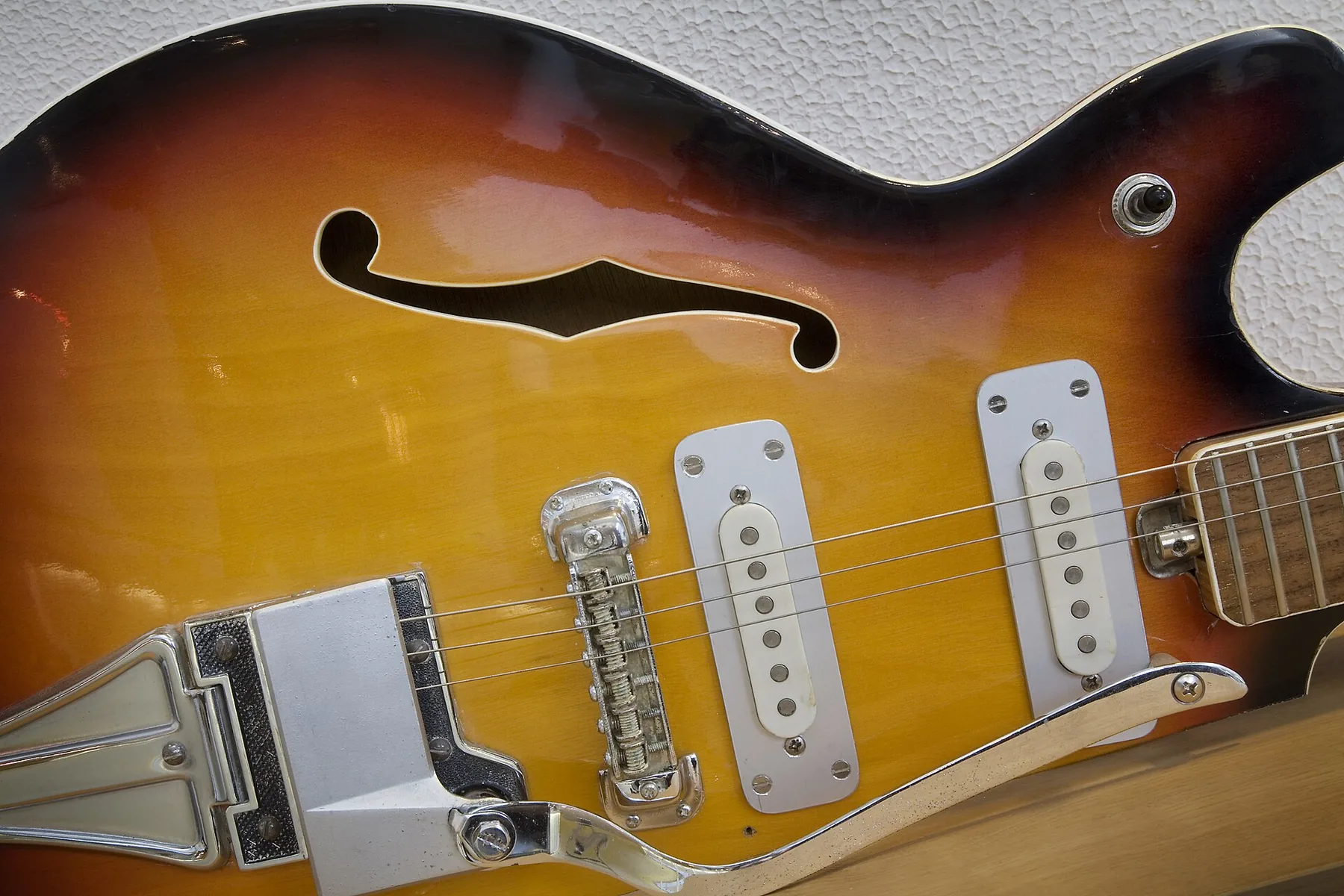
“Voted the greatest riff by BBC listeners, it beat Smoke on the Water.”
Its roots lie in the blues, but its density and intent place it in hard rock. The comparison with Deep Purple illustrates that lineage and influence.
- Simple principle: pedal tone + repetition = immediacy.
- Physical impact: silences, tight accents and controlled distortion.
- Practical pointers: pick near the bridge, use controlled palm muting and keep the tempo heavy.
Breaking down the rhythm: the Bonham–Jones engine behind the riff
The song’s groove comes from the spaces as much as the attacks: it is a collective achievement. The riff does not work alone; the sense of weight comes from guitar, bass and drums together.
Bass placement and the groove’s foundation
John Paul Jones often doubles the root note and adds slight variations in timing. These small shifts stabilize the riff and reinforce its low end.
Drumming: power, ostinatos and breathing room
The drums establish a hi-hat ostinato that provides continuity and drive. John Bonham plays with power, but uses softer hits to leave room for the voice.
“Bonham is a driving force: broad strokes, a massive snare and a keen sense of groove.”
- Listen: notice how kick drum and bass relate at the ends of phrases.
- Note: the snare “answers” rather than crowding the mix.
- Method: first practice slowly with a metronome, then play slightly behind the beat to give the rhythm weight.
This way of sustaining the energy sets up the sextuplet break, one of the technical passages most often copied by bands influenced by Led Zeppelin.
Learning John Bonham’s legendary sextuplet break without injury
To master John Bonham’s break, get comfortable with a burst of sextuplets in which every stroke counts. The passage spans two bars: the first establishes the pattern, and the second brings in the sextuplets and dynamics.
The two main bars: pattern and transitions
Bar 1: clear placement of the kick and toms frames the phrase.
Bar 2: sextuplets move across the high, mid and floor toms before returning to the snare.
Metronome practice: gradual progression
Start very slowly, at around 42 bpm, to master the pattern. Increase the tempo in steps: 48, 54, 60 and then 72 bpm before approaching the song’s target of 84 bpm.
Coordination between toms and snare: control and precision
Focus on clean strokes: even rebound, steady volume and no ghost notes. Move your left hand to the snare for the resolutions without changing the pulse.
- Safety: warm up your wrists and forearms, and stay relaxed.
- Exercise: sing the sextuplet subdivision, then play it.
- Context: isolate the break, then put it back into the song to retain its musical energy.
“Practice slowly: speed without control achieves nothing except a risk of injury.”
Blues origins and controversy: from “You Need Love” to “Whole Lotta Love”
Before the British band popularized it, the lyrics originated in a blues song written by Willie Dixon and performed by Muddy Waters in 1963. The phrasing, imagery and some vocal lines clearly come from the electric blues tradition.
Willie Dixon, Muddy Waters and the question of credit
Willie Dixon wrote the original song; Muddy Waters recorded an influential version. When the band used similar lyrics, legal action led to Dixon receiving a writing credit and a financial settlement.
What the band transforms: sound, riff and intent
Artistically, the transformation goes beyond the lyrics. The band makes the intent more direct: an amplified riff, greater distortion and rhythmic placement propel the words. These choices radically change the musical meaning and impact.
“Jimmy Page acknowledged that Plant had not changed some of the lyrics enough.”
Two aspects should be distinguished: borrowing lyrics, which raises a legal question, and reinventing the sound, which is an artistic approach. Other influences, including Small Faces, show that the track emerged from several sources of inspiration.
- Origin: You Need Love, for the lyrics and blues phrasing.
- People involved: Willie Dixon, writer; Muddy Waters, performer; the British band, responsible for the adaptation.
- Outcome: an added credit, a financial settlement and debate over creative ethics.
These legal and aesthetic issues illuminate what follows: the transformation is most apparent in the song’s structure, middle section and studio choices.
Song structure: verses, choruses and a long experimental passage
Beyond its verses and choruses, a long experimental passage breaks from the expected rhythmic framework.
You can map the track without sheet music by following audible landmarks: the riff’s entrance, the vocals, Bonham’s break, the shift into the middle section and the riff’s gradual return.
A simple map you can follow without reading music
Listening landmarks:
- 0:00 — instrumental riff enters.
- 0:xx — vocals enter: listen for the first sung word.
- Around 1:20 — experimental interlude begins.
- 3:04 — riff gradually returns and the solo enters.
The improvised middle section: 1:20 to 3:04
Structurally, this passage suspends the repeating riff to make room for isolated sounds.
Textures emerge and fade: slowed percussion, feedback, processed vocals and shifting panning in the mix.
Recommended layer-by-layer listening:
- Isolate the voice.
- Return to the percussion and hi-hat.
- Add the effects and feedback.
- Finish with the stereo movements.
This section is a useful case study in analog spatial effects. It helps musicians manage tension onstage, plan improvisation and control the energy.
“Replay the section from 1:20 to 3:04: you will hear how the mix becomes an active part of the music.”
For more on form and history, read this essay on contemporary musical form: structures and experiments.
Inside the production: how the psychedelic interlude is built
In this section, the mix becomes a playground where small sonic events take on importance. The aim is simple: reduce rhythmic density and let the space breathe.
Build the interlude: reduce the attacks, spread out the motifs and add short sounds. Claps, guitar fragments and filtered noises become focal points.
Spatial placement: work with panning and depth. Contrast close, dry, centered elements with distant elements treated with long delay or reverb. This creates a layered space in which each effect stands out.
Role of the drums: the drums hold back. A subtle hi-hat ostinato and softer strokes free up space in the frequency spectrum. The voice can breathe while gaining presence and power.
Studio tools: echo, feedback, tape-speed changes and controlled distortion. Jimmy Page’s theremin is no gimmick: it produces quick gestures that interact with the voice.
- Create two or three effects buses: short or long, mono or stereo.
- Automate the sends to make the space “move.”
- Vary the density with brief sonic events.
Listening landmarks: note when a sound moves from left to right, seems to recede under heavier reverb or stays in the center. This focused listening reveals the production choices and techniques.
Analyzing Robert Plant’s voice: performance, range and expression
Robert Plant’s voice plays a dramatic role by shaping tension and release.

Vocal range and what it demands
His range spans more than two octaves, from D3 to G5. It demands tension, projection and vocal endurance.
It allows theatrical climbs and more intimate descents.
Chest voice and falsetto: a strategy for power
Robert Plant alternates between chest voice and falsetto. Far from sounding fragile, the falsetto conveys power and contrast.
Timbre, roughness and intent
The high notes carry deliberate roughness, with pronounced attacks, compression and controlled distortion.
This creates emotional impact beyond the pitch alone.
The voice as an instrument
We hear screams, declaimed passages and sung phrases that interact with the guitar and studio effects.
Careful listening reveals moments when the voice is dry and up front, as well as moments when reverb and echo envelop it.
“A falsetto that evokes power.”
- Tips: warm up, manage your breath and avoid imitating laryngeal distortion at high volume.
- Work on projection before intensity; protect your vocal health.
In short, Robert Plant’s performance turns the vocal part into a sonic event. It interacts with the instruments and invites close listening to the mix to understand its role in the music.
The “pre-echo” between 4:00 and 4:20: hearing the effect and testing explanations
Between 4:00 and 4:20, a distant vocal figure precedes each phrase in the foreground. To the ear, a “ghost” voice seems to announce the main phrase.
What you hear
Find the passage between 4:00 and 4:20, turn the volume up moderately and listen on headphones. You will hear a quieter, spatially separated phrase before the foreground version.
Hypothesis: a tape copy
One possible explanation is a tape copy offset by about three seconds, equalized to sound distant and sent through reverb. This could explain the anticipation effect.
Why this hypothesis is questioned
Close listening and examination of a spectrogram reveal differences in vibrato and melodic movement. These variations suggest that it is not exactly the same take copied.
Possible analog techniques and artifacts
Several analog techniques could produce the effect: a partial overdub, magnetic bleed between tracks or editing manipulations. Another possibility is an artistic decision to create an anticipatory figure and play with space.
A simple way to analyze the passage at home
- Isolate the 4:00–4:20 passage on headphones.
- Compare consonant attacks and syllable lengths.
- Follow the melody in your mind to detect differences.
“A pre-echo can be a technical accident or a creative choice: what matters is checking it by listening and measuring.”
| Element | Observation | Possible interpretation |
|---|---|---|
| Vibrato | Measurable differences | Separate takes |
| Stereo placement | The distant version is more pronounced on the right or left | EQ and reverb specific to that version |
| Timing offset | Apparently about three seconds apart | Overdub or delay effect |
Understanding this pre-echo leads to the next section: after examining these clues, we will look at what analog recording makes possible.
Sound production: what analog recording enables and requires
Analog recording imposes a sonic framework that encourages careful attention to every technical choice.
Tape adds texture and hiss, but also limits the number of tracks. These constraints create a musical quality of their own: saturation becomes texture, noise becomes color.
Transparency and artifice
Transparency aims to reproduce the band’s performance faithfully. Artifacts are limited to preserve a clear soundstage.
Artifice plays with the tools: tape echo, feedback, speed changes and panning create new effects.
Useful concepts
- Saturation — texture and body in the guitar sound.
- Reverb — the source’s apparent position in space.
- Spatial placement — stereo width and movement.
- Spectral balance — balance between low and high frequencies.
In this song, the riff’s density and the middle section’s space illustrate these choices. A copy and reverb transform the voice, creating depth and anticipation.
“Artifacts are not necessarily mistakes: they can become creative gestures that distinguish a recording.”
| Element | Perception | Possible technique |
|---|---|---|
| Texture | Grainy guitar | Tape or preamp saturation |
| Distance | Distant voice | Long reverb and reduced high frequencies |
| Movement | Shifting panning | Send automation or delay |
A simple exercise: listen to an excerpt, write down three adjectives for its texture, such as “dry,” “grainy” or “distant,” then connect each to a technical process. This sharpens your ear and prepares you to recreate the effects in a home studio.
Radio edit and album version: when production meets format constraints
The shorter version changes the listening experience by removing a long sonic interlude. On the album, the track runs for 5:33. For radio, it was shortened to 3:12.
The main loss is this experimental, spacious middle passage. Radio programmers considered it “unsuitable for broadcast”: too strange, too sensual and too risky for a mainstream format.
Musically, without the psychedelic interlude, the song follows a simpler path of riffs and verses. The mix’s narrative arc—from tension to dissolution and return—is broken. Its emotional impact and sense of exploration are reduced.
“Jimmy Page said he hated the short edit and never listened to it again after hearing it once.”
From a production standpoint, cutting the middle section changes the sonic journey Page envisioned. The mix loses its breathing room, effects and much of its sense of space.
Listening tip: compare the two versions side by side. Note what is lost in space, reverb and surprises. This exercise reveals the demands of radio at the time and explains why the album version remains the recommended way to hear the whole piece.
Practical workshop: analyze the complete track at home, from guitar to mix
Set aside 30 to 60 minutes to reproduce what you hear step by step and understand how the elements fit together.
Guitar pointers
Sound: distorted but defined power chords. Set the gain so the attack remains clear.
Playing: compare palm-muted and open chords. Record four takes and choose the one with the most rhythmic weight.
Drum pointers
Isolate the sextuplet break. Start at 42 bpm, then increase the tempo in stages up to 84 bpm.
Check your coordination between toms and snare, and keep the strokes clean.
Production pointers
Create two reverbs, one short and one long, plus a delay and shifting stereo panning.
Test the pre-echo at 4:00–4:20 in two ways: record a second take and EQ it to sound distant, then try an anticipatory delay. Compare both results with the original by listening.
“Make sure the energy comes from timing, not just volume.”
| Element | Goal | Method |
|---|---|---|
| Guitar | Clarity and power | Power chords, controlled gain, four takes |
| Drums | Precision in the break | 42 to 84 bpm, sextuplets, tom and snare coordination |
| Mix | Space and movement | Panning, two reverbs, delay, automation |
A quick checklist: does the riff remain clear? Does the break land in the right place? Do your effects trace a path through the mix? Check these points, adjust and try again.
Conclusion
: this analysis highlights the close link between musical performance and studio decisions.
Summary: you now have a listening method, an analysis of the central riff, an understanding of the rhythmic engine and practical pointers for recreating the sound treatments.
Artistic overview: Jimmy Page shapes the sonic palette, Robert Plant brings the expressiveness, and the psychedelic interlude confirms the studio’s experimental approach.
This track remains a major work of rock. Led Zeppelin strikes a rare balance between immediacy and exploration.
Next step: repeat the workshop with another hard rock standard. Note the timestamps, your hypotheses about the effects and the mix choices to turn listening into a skill.
Finally, reread this article with its central idea in mind: analyzing this masterpiece means learning to connect musical intent with studio decisions. Led Zeppelin remains a reference point; listen again, compare and practice.
Led Zeppelin: listen methodically, then create.